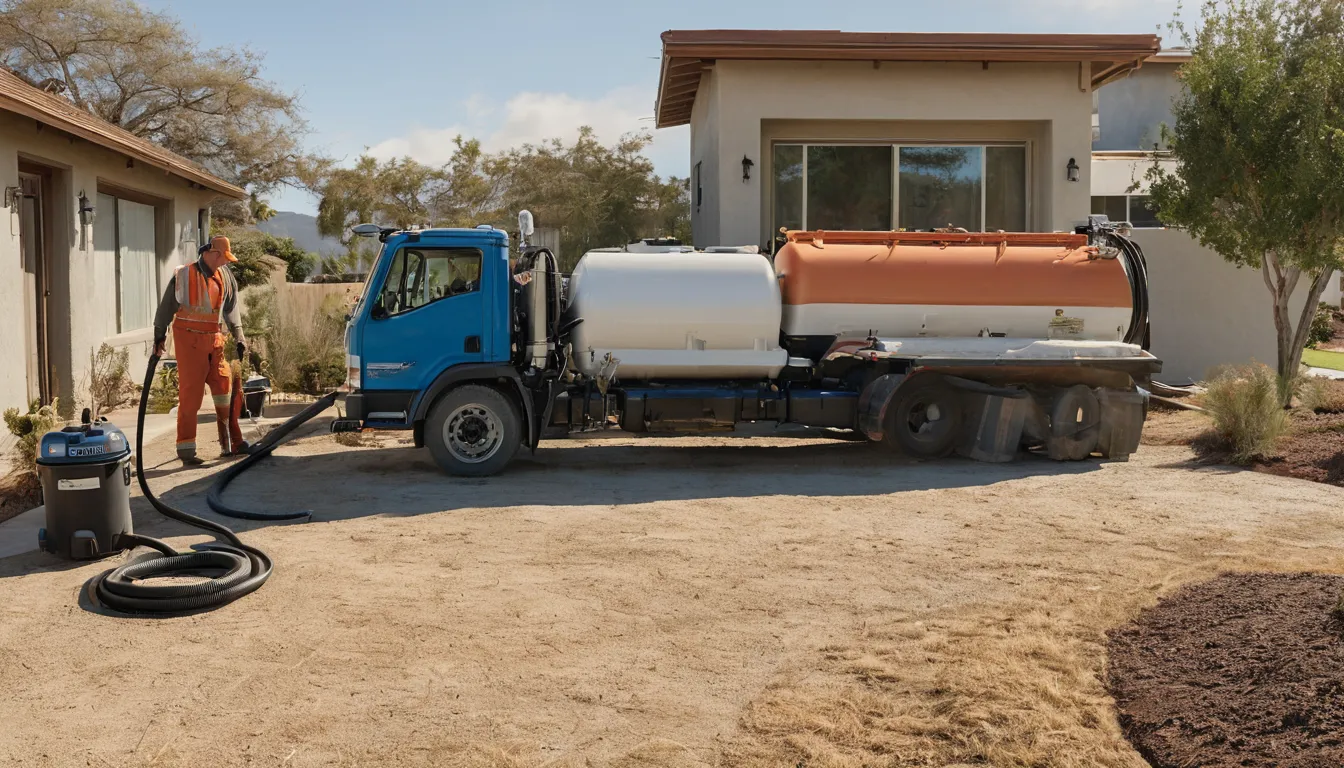
Septic Tank Pumping
Slow drains or a soggy yard usually mean the tank needs pumping, and independent providers in our network can help.
Slow drains, gurgling pipes or a soggy yard? Longgines Septic connects San Juan Capistrano homeowners with independent local providers who pump, inspect and repair septic and sewer systems. Request an estimate with no obligation.
No obligationYour toilet gurgles. The shower drains slowly. A patch of lawn smells off, or stays wet when the weather has been dry. If you have never dealt with this before, it can feel like a mystery. It is usually a puzzle you can break into small steps.
Longgines Septic is a referral service. We do not dig, pump or fix anything ourselves. We connect you with independent providers in our network who handle septic tank pumping, sewer line repair and septic system repair in San Juan Capistrano and the San Juan Capistrano area.
Older homes bring extra surprises. Pipes may be clay, cast iron or old fiber conduit. A past owner may have patched a line without leaving notes. A tank may sit under a lawn with no marker. A good provider knows how to look for these things.
Start by reading the signs below, try the safe checks, and then reach out when the job goes past what a handy homeowner should do.
Prefer to write it all down first? You can describe the problem and ask for a quote instead.
Longgines Septic matches your request with an independent local provider. The provider visits, diagnoses the problem, gives you a written quote and does the work if you agree. We never do the work and we do not set the price.
Aging materials fail in ways new pipe does not. Roots slip into joints. Clay cracks. Cast iron rusts from the inside. Tanks built decades ago may be smaller than today's, or have worn lids and baffles.
Past repairs matter too. A quick fix from years back can hide a bad connection. That is why many providers like to run a camera through the line before they quote a repair. It shows what is really down there.
You can find your cleanout, clear the area around a tank lid, and spread out laundry loads. You can also stop flushing wipes. You should not open a tank, climb in or dig near a line. Tank gases are dangerous, so leave that to a pro.
Typical costs vary a lot by job, so always get a written quote.
Homes around San Juan Capistrano and across the San Juan Capistrano area come in many types. You will find stucco ranch houses on slabs, raised foundations, older bungalows and plenty of tract homes built from the 1950s through the 1980s. Each style hides its plumbing a little differently.
On a slab, a sewer line may run right under the floor. On a raised foundation, you may be able to see pipes from a crawl space. Neither is a DIY dig. Both are things a provider can inspect with a camera.
The weather here shapes septic care too. Long dry seasons can leave the soil hard and tree roots hunting for water, and they often find your pipes. Winter rain events can then saturate a drainfield fast. Smoke seasons keep many people indoors, which means more showers, laundry and flushing at home.
If you also rely on a private well, mention it. Some providers offer water well service or can point you to someone who does, since a septic tank and a well need safe distance and good care.
Ready to start? Request a callback to check provider availability in your part of the area.
Or send details and ask for a written estimate.
Check a water bill. A sewer charge usually means a city line. No sewer charge often means a septic tank. Look for a lid or mound in the yard too.
Slow drains, gurgles, sewage smells, lush green patches over the tank area and wet ground are all clues. Backups in the drain on the bottom floor of the house deserve quick attention.
Many households pump every three to five years. A bigger family or a small tank may need it sooner. Ask a provider what fits your system. Septic tank pumping is the most common maintenance job.
A backup into the house, or sewage pooling in the yard, may call for emergency septic cleaning. Stop using water, keep kids and pets away and ask for help.
Keep cars and heavy gear off it. Plant grass, not trees. If it stays soggy, ask about drainfield repair before the damage spreads.
Grease, wipes, paint, harsh chemicals and food scraps stress both tanks and old pipes. Skip additives unless a provider recommends one.
Some policies may cover sudden damage, but wear and tear is often excluded. Check your policy. Providers can often help document damage for a claim.
Ask for pumping records, a tank location map and a camera inspection. These small steps can save you from a big surprise.
Photograph lids, write down service dates and store receipts. The next owner, or you, will be glad you did.
Ready to talk to a local provider? Tell us what you see, hear or smell, and what kind of house you have. A short note is enough to start.
Request a callback to check provider availability, or send a request and ask for a written estimate. There is no obligation, and you choose whether to hire.
If you would rather talk it through, here is the quick route.
Many homes pump every three to five years, but it depends on tank size, household size and water use. An older tank may need checks more often. A local provider can inspect it and suggest a schedule.
Look for slow drains in several fixtures, gurgling, sewage smells, wet spots in the yard or repeated backups. Older clay and cast iron lines are prone to cracks and roots. A camera inspection can confirm the cause.
You can handle small tasks, like spacing out laundry, clearing around lids and finding cleanouts. Opening tanks, digging or handling sewage is unsafe and should be left to a provider.
Some policies may cover sudden damage, but not wear, age or lack of maintenance. Check your policy and ask your insurer. Providers can often help document damage for a claim.
In the U.S., pumping often runs a few hundred dollars, while sewer line and drainfield repairs can range from hundreds to many thousands, depending on access, depth, materials and local rules. Prices vary by job, so ask for a written quote from each provider and compare what is included.
Tell us what is going on with your septic or sewer. Request an estimate and a local provider in our network can follow up. No obligation.
Here are the three kinds of help you can request. Each one is done by an independent provider in our network, not by Longgines Septic. Pick the one that sounds closest to your problem, or ask and let a provider sort it out.
Slow drains or a soggy yard usually mean the tank needs pumping, and independent providers in our network can help.
Sewer line trouble in an older house is stressful, but a clear plan makes the next step easier.
Learn the warning signs, what you can safely check, and when a local provider should take over.
Aging pipes, forgotten tanks and old patches need a careful look. We point you to providers who inspect before they quote.
No jargon. You learn what is safe to try and when to stop.
Providers in our network set their own prices and schedules, so you compare written quotes and choose what suits your home.
Asking costs you nothing but a few minutes. You decide whether to hire, and when.
Tell us what is going on with your septic or sewer. Request an estimate and a local provider in our network can follow up. No obligation.
No obligation